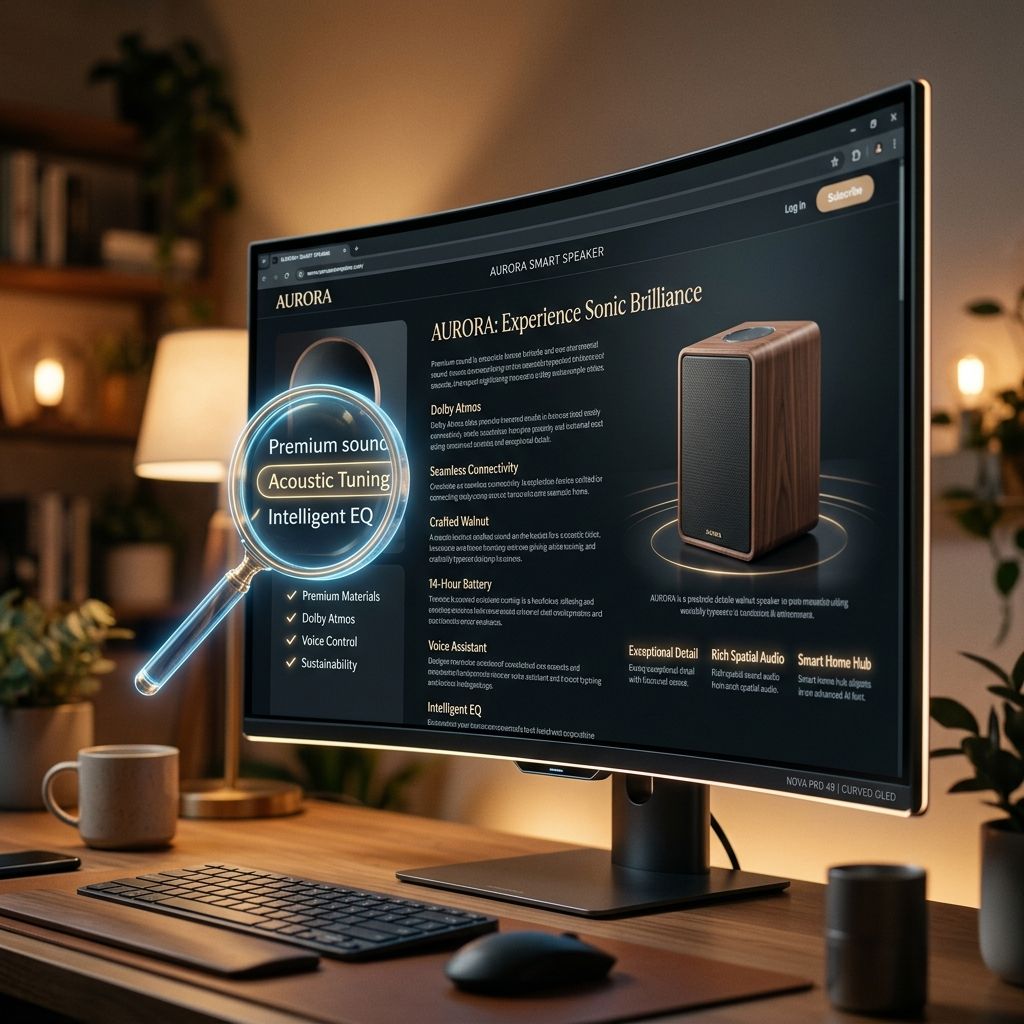
For decades, the journey from product need to purchase almost invariably began with a visit to Google. Whether it was a broad search for "best running shoes" or a specific query for "iPhone 15 price," Google was the gateway to product discovery. However, a profound transformation is underway. Artificial Intelligence is increasingly recommending products to users without them ever typing a query into a traditional search engine.
This shift represents a monumental challenge and opportunity for ecommerce brands. Understanding the mechanisms behind these AI-driven recommendations is crucial for adapting your strategy and ensuring your products remain discoverable in this new era of intelligent commerce.
The Limitations of Traditional Search
Traditional search engines, while powerful, are primarily designed for keyword matching. They excel at retrieving documents that contain specific terms. However, human language is nuanced, and intent is often implicit. A user searching for "comfortable shoes for standing all day" might not explicitly mention "arch support" or "cushioning," but these are the underlying needs.
AI, particularly Large Language Models (LLMs), can bridge this gap. They understand the meaning behind the words, allowing for a more intuitive and personalized product discovery experience that often bypasses the need for a Google search altogether.
The Core Technologies Enabling AI Recommendations
Several advanced AI technologies converge to enable product recommendations outside of traditional search engines:
1. Large Language Models (LLMs): Understanding Natural Language Intent
LLMs are the brains behind conversational AI. They are trained on vast amounts of text data, allowing them to understand, generate, and respond to human language with remarkable fluency. When a user asks an AI assistant, "I need a durable laptop for video editing that's under $1500," the LLM can parse this complex request, identify key attributes (durable, laptop, video editing, price constraint), and translate them into actionable product criteria.
2. Vector Search and Embeddings: Semantic Matching Beyond Keywords
This is perhaps the most significant technological leap. Instead of matching keywords, AI systems convert both user queries and product descriptions into numerical representations called embeddings or vectors. These vectors capture the semantic meaning of the text. Products that are semantically similar to the user's query will have vectors that are numerically close in the vector space, even if they don't share exact keywords. This allows AI to recommend products based on underlying meaning and context, rather than just surface-level terms.
3. Knowledge Graphs and Entity Recognition: Connecting Products to Concepts
AI systems build and leverage knowledge graphs, which map out entities (products, brands, features, categories) and their relationships. When an AI understands that "running shoes" are a type of "footwear," and "Nike" is a "brand" that produces "running shoes," it can make more intelligent and contextually relevant recommendations. This entity-based understanding allows AI to connect user needs to specific product attributes and brands, even if the user doesn't explicitly mention them.
4. Personalization Algorithms: Tailoring Recommendations to Individual Users
Beyond semantic matching, AI systems employ sophisticated personalization algorithms. These algorithms analyze a user's past browsing history, purchase behavior, stated preferences, and even demographic data to fine-tune recommendations. This ensures that the products suggested are not only relevant to the query but also to the individual's unique tastes and needs.
Where These Recommendations Happen
These AI-driven product recommendations are surfacing in various new channels:
- AI Shopping Assistants: Dedicated platforms like Shopify's AI personal shopper or Amazon's Rufus AI engage directly with users, offering conversational product discovery.
- Conversational Platforms: General-purpose LLMs like ChatGPT, Gemini, and Claude, when equipped with web browsing capabilities or plugins, can act as powerful shopping assistants.
- Direct Integrations: Brands are integrating AI recommendation engines directly into their own websites and apps, providing a personalized experience that anticipates user needs.
- Social Commerce: AI is increasingly influencing product discovery within social media platforms, suggesting products based on user engagement and content consumption.
Implications for Ecommerce Brands
For ecommerce brands, the shift away from Google as the sole arbiter of product discovery has profound implications:
- Data Quality is Paramount: AI systems feed on structured, accurate, and comprehensive product data. Brands with poor product information management (PIM) will struggle to be understood and recommended by AI.
- Focus on Semantic Richness: Content must be entity-rich and semantically optimized, clearly defining product attributes, use cases, and benefits in natural language.
- Build Topical Authority: AI trusts authoritative sources. Brands need to create comprehensive content that establishes their expertise in their niche, making them a go-to source for AI.
- Embrace Conversational Interfaces: Brands should prepare for a future where customer interactions are increasingly conversational, requiring content that is easy for AI to parse and synthesize.
- Diversify Discovery Channels: Relying solely on Google SEO is no longer sufficient. Brands must optimize for visibility across various AI-powered platforms and conversational interfaces.
Conclusion
The era of AI-driven product recommendations is here, and it's fundamentally changing the landscape of ecommerce. While Google will remain a significant player, the power to influence purchasing decisions is becoming more distributed, residing within intelligent AI assistants and conversational platforms. Ecommerce brands that understand and adapt to the underlying technologies of LLMs, vector search, and knowledge graphs will be best positioned to ensure their products are not just found, but intelligently recommended, to the next generation of online shoppers.