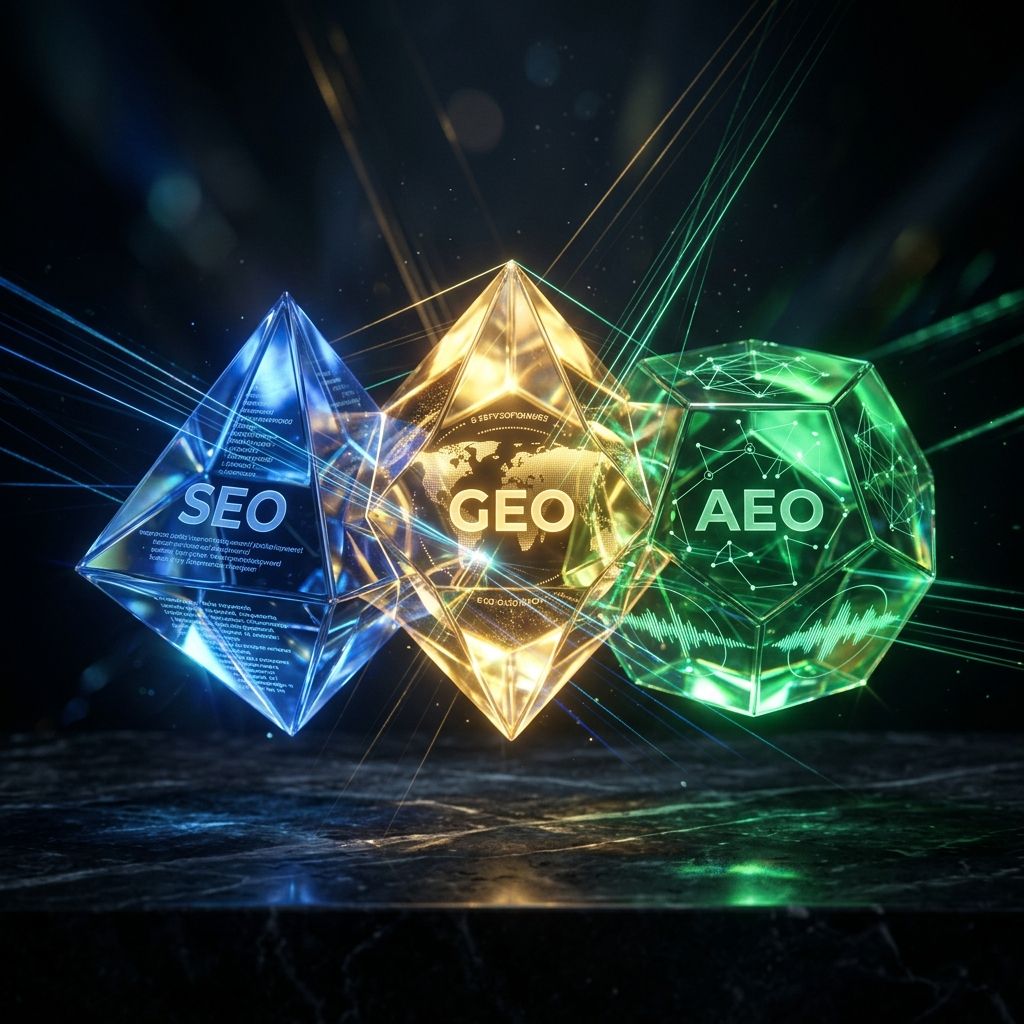
The world of online search is in constant flux, and for ecommerce brands, keeping pace is not just an advantage—it's a necessity. What once was a relatively straightforward game of Search Engine Optimization (SEO) has evolved into a complex ecosystem that includes Answer Engine Optimization (AEO) and Generative Engine Optimization (GEO). Understanding the nuances and interdependencies of these three strategies is crucial for maintaining visibility and driving sales in the AI era.
This article will demystify SEO, AEO, and GEO, explaining their core principles, key differences, and how ecommerce brands can integrate them into a cohesive, future-proof search strategy.
Traditional SEO: The Enduring Foundation
Search Engine Optimization (SEO) is the practice of increasing the quantity and quality of traffic to your website through organic search engine results. For decades, SEO has been the bedrock of digital marketing, focusing on tactics such as:
- Keyword Research: Identifying terms and phrases users type into search engines.
- On-Page Optimization: Optimizing content, meta tags, and internal linking for target keywords.
- Technical SEO: Ensuring website crawlability, speed, and mobile-friendliness.
- Link Building: Acquiring high-quality backlinks to improve domain authority.
While the landscape has changed, the fundamental goal of SEO—making your website discoverable by search engines—remains vital. A well-optimized website is still the entry point for AI systems that browse the web for information [1].
The Rise of AEO: Answering User Intent Directly
Answer Engine Optimization (AEO) emerged as search engines began to prioritize direct answers to user queries, often displayed in featured snippets or "People Also Ask" boxes. AEO focuses on structuring content to provide concise, authoritative answers to specific questions.
For ecommerce brands, AEO is critical because many shopping journeys begin with a question (e.g., "What is the best material for a winter coat?"). Key AEO tactics include:
- FAQ Sections: Creating dedicated FAQ pages or sections on product pages.
- Snippet-Friendly Formatting: Using clear headings, bullet points, and short paragraphs.
- Direct Answers: Providing the answer to a question immediately, followed by a more detailed explanation.
AEO bridges the gap between traditional search and conversational AI, as AI models often pull from content optimized for direct answers.
Embracing GEO: Optimizing for Generative AI
Generative Engine Optimization (GEO) is the newest frontier, driven by the rise of Large Language Models (LLMs) like ChatGPT, Gemini, and Perplexity. GEO focuses on optimizing content so that it is understood, synthesized, and cited by generative AI engines.
Unlike traditional search engines that return a list of links, generative engines provide synthesized, conversational responses. GEO strategies prioritize:
- Entity-Rich Content: Using natural language that clearly defines entities (brands, products, concepts) and their relationships.
- Contextual Depth: Providing comprehensive, authoritative information that AI models find valuable for generating responses.
- Citation-Worthy Insights: Creating original research, data, or unique perspectives that AI systems are likely to reference.
- Structured Data: Using Schema.org markup to provide explicit context about your content.
GEO is about becoming a trusted source of information for AI, ensuring your brand is part of the conversation when users ask complex, multi-faceted questions.
Key Differences and Synergies
While SEO, AEO, and GEO have distinct focuses, they are not mutually exclusive. In fact, they are highly synergistic.
| Feature | SEO | AEO | GEO | | :--- | :--- | :--- | :--- | | Primary Goal | Rank high in search engine results pages (SERPs). | Provide direct answers in featured snippets and voice search. | Be cited and synthesized by generative AI engines. | | Focus | Keywords, backlinks, technical site health. | Concise answers, FAQ formatting, structured data. | Context, entities, topical authority, citation-worthy content. | | User Interaction | Clicking links to visit websites. | Reading answers directly on the search results page. | Engaging in conversational queries with AI assistants. | | Content Style | Keyword-optimized, comprehensive articles. | Snippet-friendly, question-and-answer format. | Entity-rich, authoritative, natural language. |
Implementing a Unified Strategy for Ecommerce
To succeed in the modern search landscape, ecommerce brands must adopt a unified approach that incorporates elements of all three strategies.
- Start with a Strong SEO Foundation: Ensure your website is technically sound, fast, and mobile-friendly. Conduct keyword research to understand user intent.
- Incorporate AEO Tactics: Identify common questions your customers ask and create content that answers them directly. Use FAQ schema and snippet-friendly formatting.
- Elevate with GEO: Focus on building topical authority. Create in-depth, entity-rich content that provides unique value. Implement comprehensive structured data to help AI understand your products and brand.
By integrating SEO, AEO, and GEO, ecommerce brands can maximize their visibility across traditional search engines, answer engines, and the rapidly growing ecosystem of generative AI assistants.